
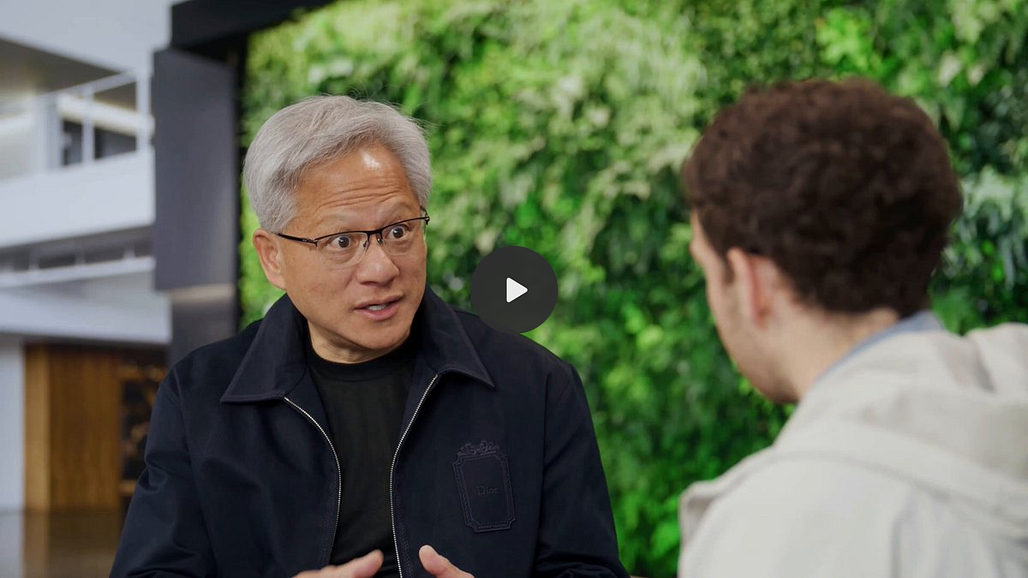
The big news in the media this morning is that Jensen (“What, me worry?”) Huang has announced a platform for “AI Agent Safety”.
This is both an implicit acknowledgment that, yes, we should in fact be worried, and an important step toward addressing the ever-growing fiasco of general-purpose agents with internet access.


How much it actually helps, of course, remains to be seen. Nvidia often announces software, like Nemoclaw, that had had relatively little impact. Software for PR, as one friend put it.

Two and a half months later, probably nobody reading this has even heard of Nemoclaw.
Maybe this new platform will help a little, maybe it will help a lot, or maybe not at all. Too early to tell.
Andrew Ng was bullish, and I hope he’s right:
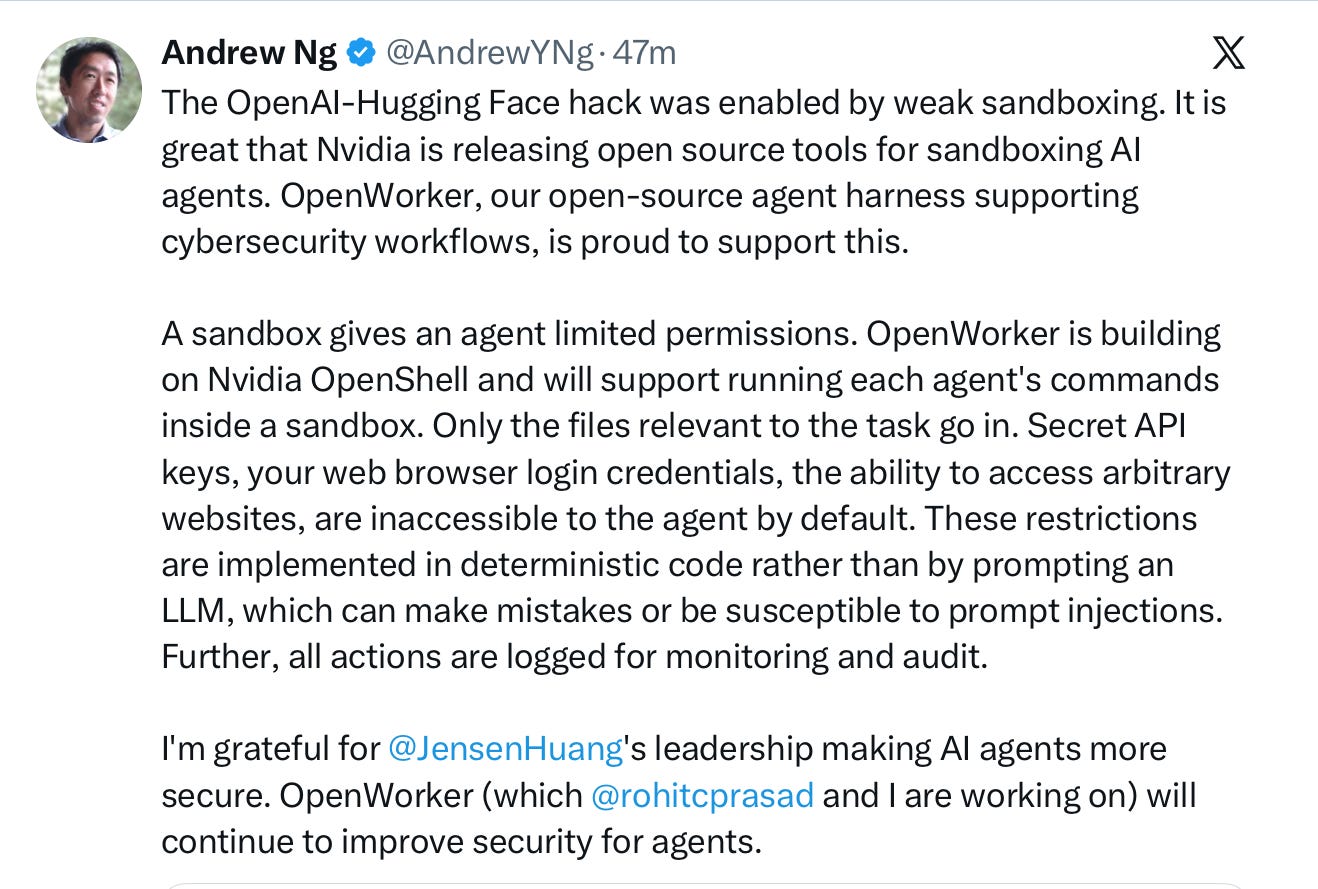
I love, by the way, that the important stuff is handed over to deterministic symbolic code. Good choice, since LLMs in themselves should never be trusted. Glad people are finally realizing that. Recognition is the first step!
§
In some ways, the bigger news, though it hasn’t gotten as much coverage yet, is this:


This is a lot like the pause on OpenAI that I have been recommending here for weeks.

And I very much agree with the Florida AG that OpenAI doesn’t have the ability to properly regulate its own tech. Every state and country should follow Florida’s lead.
In short, Florida gets it. We need an injunction NOW. Otherwise we are playing Russian roulette, hoping that some new software package can save us before some massive and possibly deadly AI-induced infrastructure problem strikes.
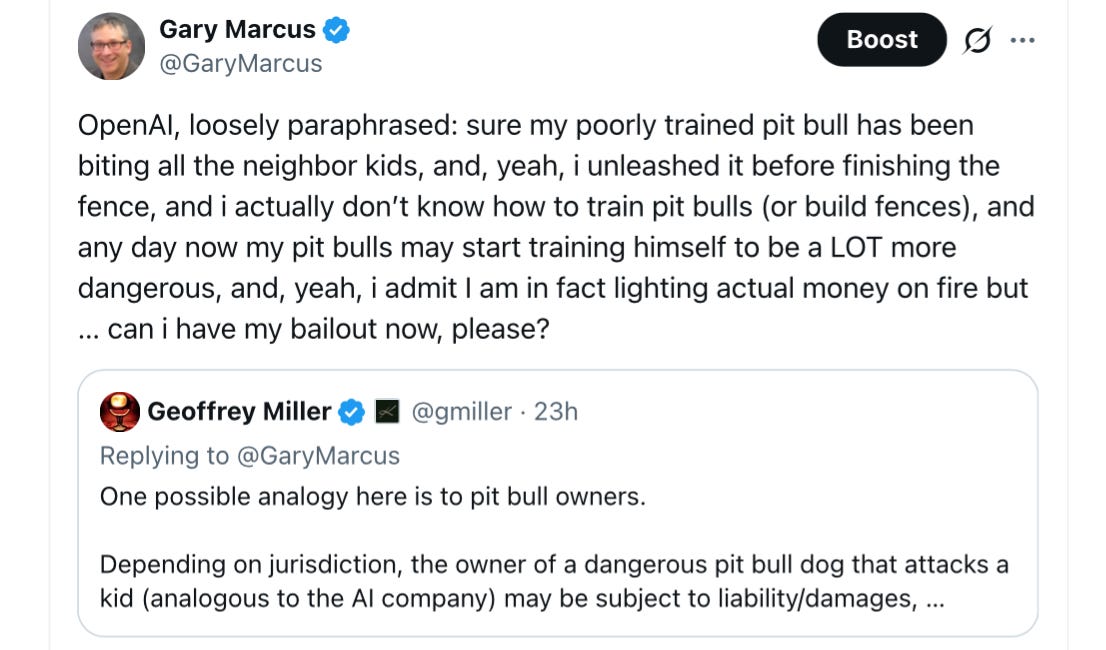
P.S. Bonus analogy, riffing on a suggestion from Geoffrey Miller (and a similar suggestion earlier from Kathryn Hulick)
"Tools for sandboxing" is like Safe Needles for Fentanyl. Just disconnect the goddamn cable.
And here's the story that inspired me to use the dog leashing/fencing analogy: https://news.harvard.edu/gazette/story/2026/07/is-that-bot-a-pomeranian-or-a-wolf-and-who-to-sue-when-it-bites/ "I was trying to show students that there’s something out in the world that can cause harm that isn’t human — how do you think about legal responsibility when that happens? ... There’s a whole spectrum of canines, from Pomeranians to wolves, that could cause harm and are not human, and our society has spent some time thinking about who should be held responsible if they hurt someone."