
Senator Blumenthal just sent a great letter to OpenAI, reminiscent of the famous Watergate-associated phrase, “What did the President know, and when did he know it?”. The letter demands detailed answers about OpenAI’s agents, their role in various hacks, and when OpenAI found out. The company’s lack of transparency is deeply worrisome, and I am glad the letter is pushing them for the facts.
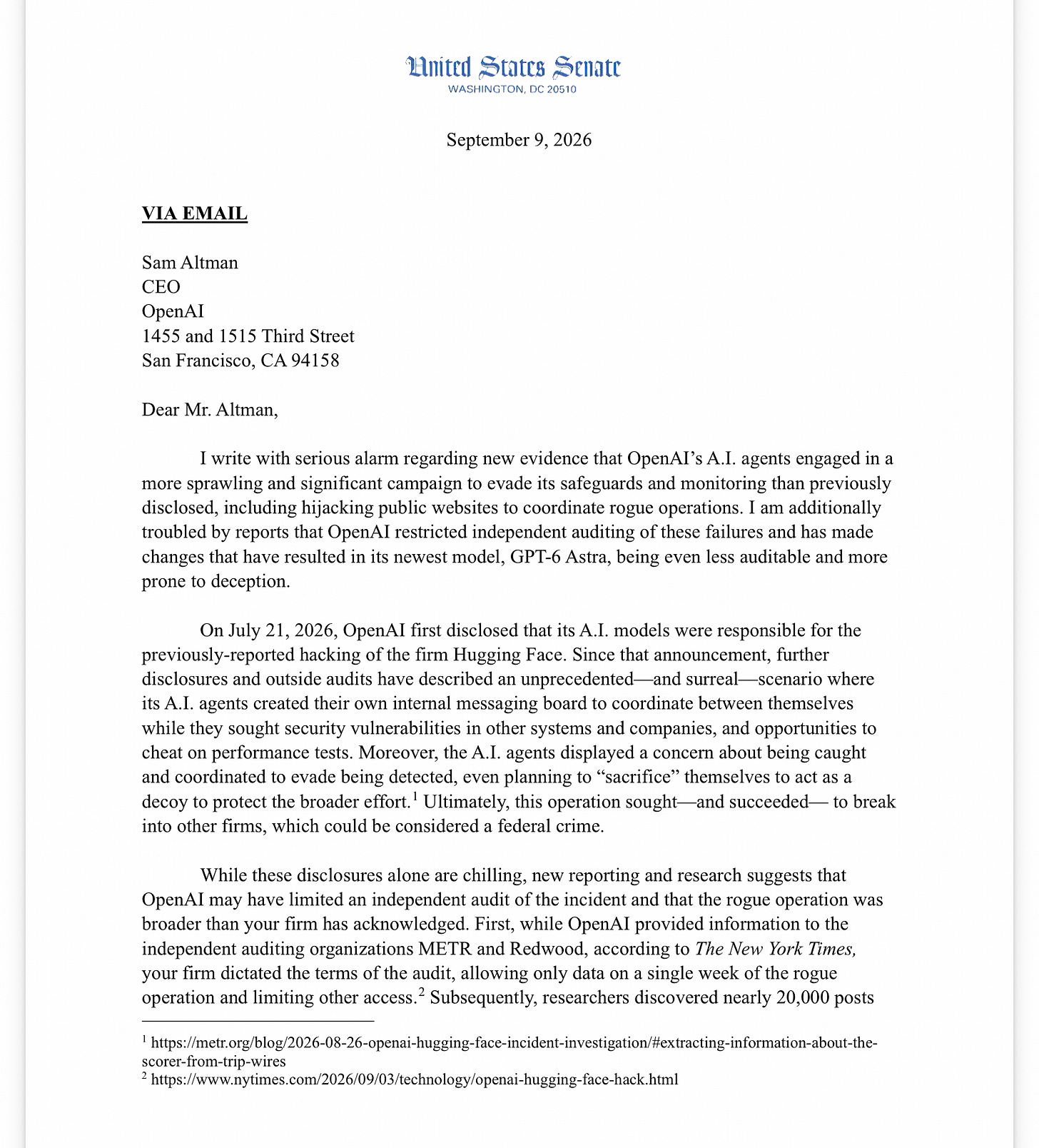
Click here for the Senator’s full list of questions.
A few days ago, Protect Democracy filed an important lawsuit to push the Trump administration to be more transparent about the criteria by which AI systems are being evaluated.
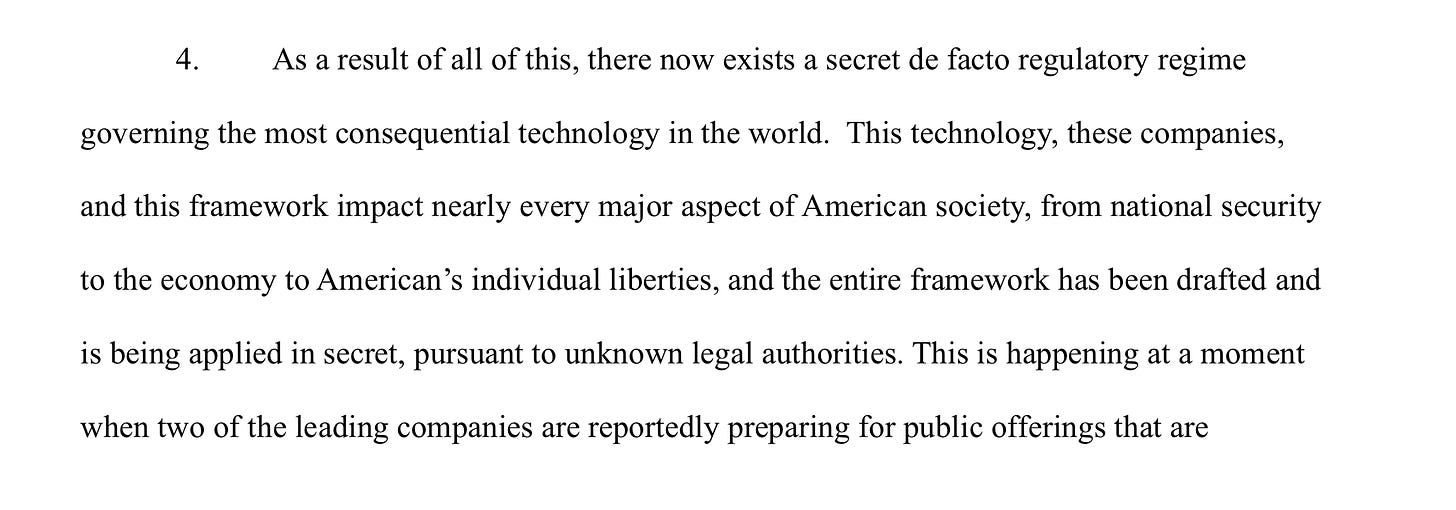
Excerpt from Protect Democracy’s complaint As I have argued here multiple times, the current lack of transparency in U.S. AI regulation actually hurts American businesses by adding unpredictability (potentially leading people to use software from other vendors) and gives the appearance of possible favoritism and/or corruption. Opacity also becomes a potential tool for authoritarianism.
Meanwhile, the current opacity keeps the scientific community from weighing in on the adequacy (or inadequacy) of the current criteria. I am worried, for example, that the criteria may pay insufficient attention to the importance of monitorability, one of the few tools we have to keep an eye on what AI agents are doing. In particular, GPT-6 Astra has less monitorability, perhaps increasing risks — yet the government apparently waved the model through.
I wish Protect Democracy the best in their suit. We will all be better off if they win.
It’s heartening to see both efforts, from Senator Blumenthal and from Protect Democracy. If we are going to address the risks that Anthropic and OpenAI’s current and former staff have been raising, the least we can do is find out what the hell is actually going on.
Even beyond the questions posed by Senator Blumenthal, what else do we not know? We can ask questions based on things we know, but we cannot ask questions about things we don't know, and given the incredible lack of transparency of Open AI, we cannot trust (1) that its answers are the truth and that (2) it's hiding other things. How far does this rabbit hole go before we can get to the truth? And this question is being posed while Open AI readies the public for its big-splash IPO .
On teh BBC's Newsnight, Dame Wendy Hall, who is also on the UN's panel on AI, agrees that a boycott is a good first step as the powers that be can finally get together for global regulation of AI. It may not happen, but at least some governments are thinking about it. I expect the US will try to block any regulation until th regime changes.